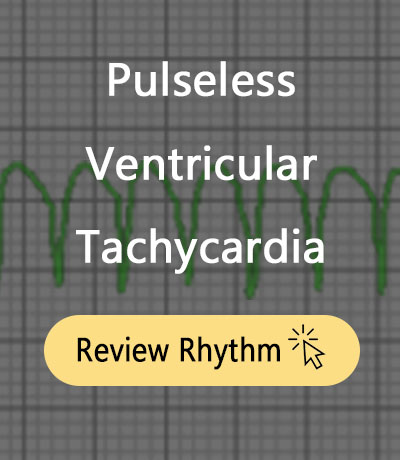
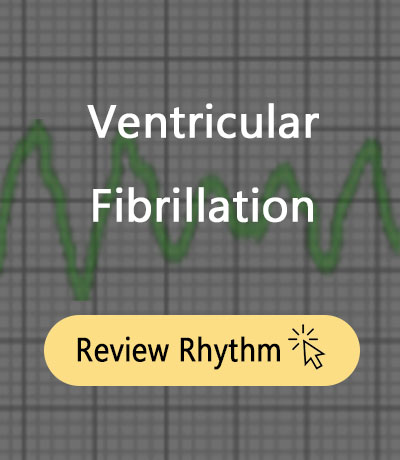
Each Icon below will take you to a page for the Respective ACLS EKG. These pages cover all of the cardiac arrhythmias that you will experience in the ACLS provider course. Rhythms from Ventricular Fibrillation to Complete Heart Block are covered. Examples of each ECG tracing are provided, and after each article is a short video that simulates the ACLS ECG on a defibrillator monitor.
You will also find a question and answer section below each rhythm video. This area covers the most common questions asked about each rhythm. Feel free to leave a comment or question as you review the content.
Pulseless Rhythms
Bradyarrhythmias
Tachyarrhythmias
PMO Software says
So simple explaination. Thank you so much for the excellent class.
Cassandra Duren says
Your site is AWESOME!!!!!!!!!! Thank you!!
mwaltonshirley says
Hi. In my 3 decade career as a cardiologist, I’m unaware you can obtain CME credit for doing ACLS. Is education credit ONLY for non-physicians or has that changed? Thanks for all. Enjoying your site.
ACLS says
The ACLS training on this website is an accredited course that offers 8 AM APRA credits if a physician completes the interactive course guide, post test and survey.
Please let me know if you have any other questions.
Kind regards,
Jeff
Anna says
Hi Jeff. Thanks for your web site. Its always such a huge help for me. Any other tricks or tips for
distinguishing second degree heart block from third degree???? I have studied this over and over and every time I re-certify I always struggle with this one.
Thanks, Anna
ACLS says
Thank you for the question. Repetition is the key blocks. They can be very difficult to recognize but typically you at least recognize there’s something abnormal and then you can focus on from there. Practice practice
Nina Tabachnikov says
I really satisfied with this course. Very specific and very helpful . I am very happy that I find this site. Thank you very much.
ACLS says
Hi Nina,
You are very welcome. I’m so glad that you have found the website to be helpful.
Kind regards, Jeff
David says
Love the audio series!
Cardiac arrest (Vf) question 8 the first dose of amio you say incorrectly 350 mg first dose but written on audio screen correctly 300 mg
This is a great series addition and this site just keep getting better!!!
Thanks
ACLS says
Thank you for letting me know about that! I’ll get that corrected as soon as possible. Kind regards, Jeff
Yolanda Carter says
Can’t find the practice ACLS rhythm test
ACLS says
You can find the EKG practice test library in the main menu under ACLS made simple.
Kind regards, Jeff
craig griffiths says
its a good review course
ACLS says
Thank you Craig. Kind regards, Jeff
Ramin Moradi says
awesome course and awesome material! thanks for making it (dare I say) fun!!
ACLS says
Thanks so much! I’m so glad that you found the site enjoyable and useful!
Kind regards, Jeff